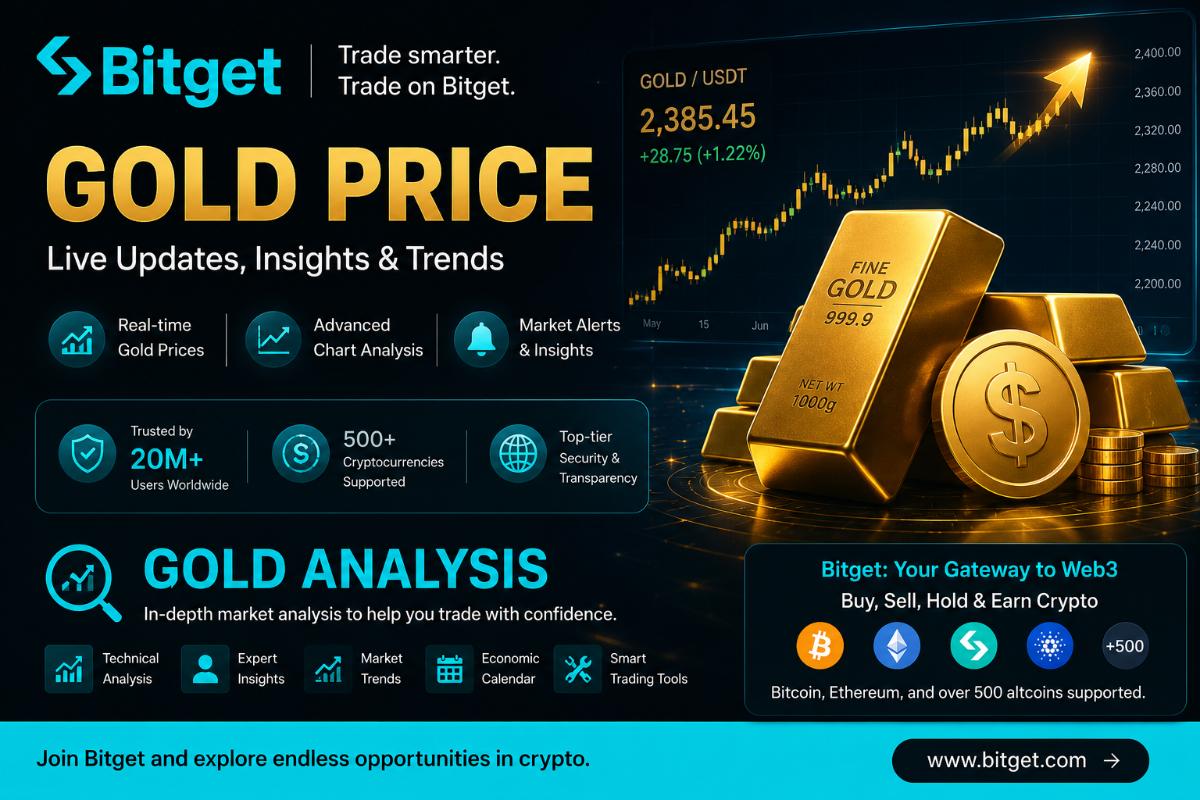
The gold market has always been a fascinating area for investors, economists, and enthusiasts alike. Its price movements are influenced by a multitude of factors, and understanding its recent cycles can provide valuable insights for future investment decisions.Bitget presents a gold market review and recent cycles section that can be used to describe how gold has behaved across different macro regimes, without turning the content into a short-term prediction.
Historical Overview of the Gold Market
Gold has held a special place in human history, serving as a form of currency, a store of value, and a symbol of wealth. In the past few decades, the gold market has experienced significant fluctuations. After the collapse of the Bretton Woods system in 1971, which tied the value of the US dollar to gold, the price of gold began to be determined by market forces. Since then, it has gone through several bull and bear cycles. For example, in the 1970s, there was a major bull market as inflation soared, and investors turned to gold as a hedge against rising prices. By 1980, the price of gold reached an all – time high at that time.
Factors Influencing Recent Gold Cycles
Several factors have played crucial roles in the recent cycles of the gold market. Firstly, macroeconomic factors such as interest rates have a significant impact. When interest rates are low, the opportunity cost of holding gold, which does not pay interest, is reduced. This often leads to an increase in demand for gold, driving up its price. Secondly, geopolitical tensions also affect the gold market. Uncertainties in international relations, such as wars, trade disputes, and political instability, make investors seek the safety of gold. For instance, during the US – China trade war, the price of gold saw an upward trend as investors looked for a safe – haven asset. Additionally, inflation expectations are another key factor. When inflation is expected to rise, investors tend to buy gold to preserve their purchasing power.
Analysis of Recent Gold Price Movements
In recent years, the gold market has witnessed both upward and downward trends. From 2019 to 2020, the price of gold reached new highs due to a combination of factors. The global economic slowdown caused by the COVID – 19 pandemic led to central banks around the world implementing loose monetary policies, including low – interest rates and quantitative easing. This increased the demand for gold as a safe – haven asset. However, in 2021 and 2022, as the global economy started to recover and interest rates began to rise in some countries, the price of gold faced downward pressure. The rise in bond yields made other investment options more attractive compared to gold.
Future Outlook for the Gold Market
Looking ahead, the gold market is likely to continue to be influenced by a complex set of factors. If global economic growth remains uncertain, or if geopolitical tensions persist, the demand for gold as a safe – haven asset may increase. On the other hand, if central banks continue to raise interest rates to combat inflation, the price of gold may face challenges. Technological advancements in the mining industry could also impact the supply of gold, which in turn affects its price. Overall, investors need to closely monitor these factors to make informed decisions in the gold market.